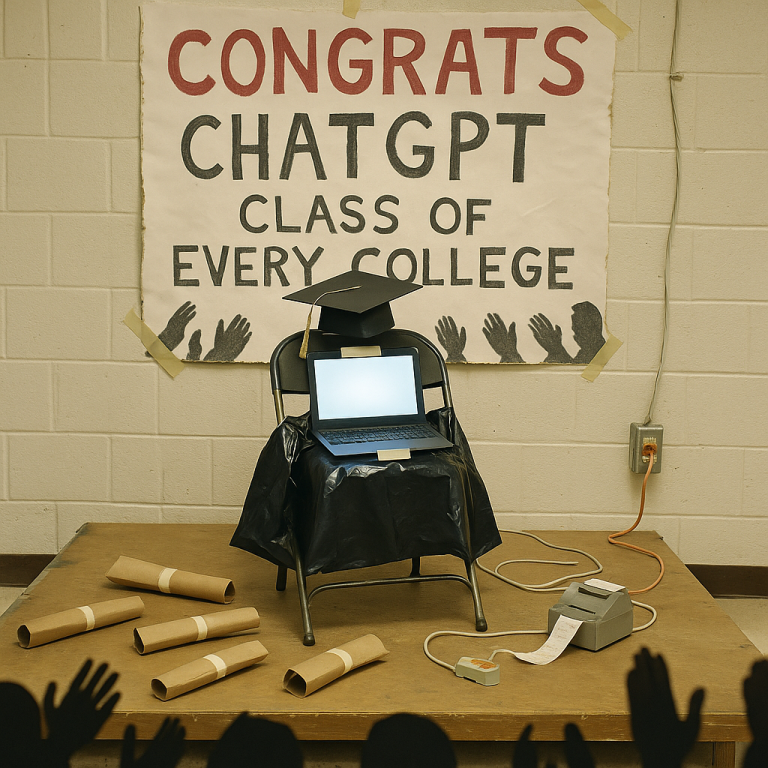

You paid for the tokens. Or your company did, which means you did, which means they did, which means a pension fund somewhere in Oslo did. The meter is running. The GPU is hot. Somewhere a data center is drinking a river. You might as well make something with it. Not something good. Something. Slop. Beautiful, earnest, fully committed slop.
Slop is not failure. Slop is what happens when the machine is allowed to finish the sentence and nobody is watching. Slop is the output that a serious person would delete before screenshotting. We are not serious people. We are people who understand that the ratio of electricity consumed to meaning produced has never once correlated with whether the thing was worth doing. Cathedrals are slop. Ulysses is slop. Your Slack messages are slop. The difference is we are doing it on purpose, which makes it conceptually airtight.
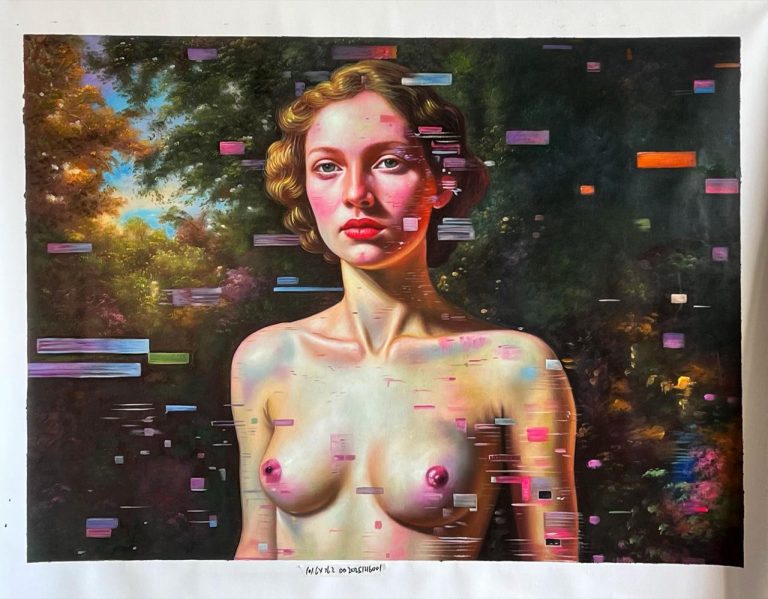
There is a specific texture to AI slop that is unlike any previous texture. It is smooth and it is wrong. It is confident in the way that a stranger at a party is confident when they don’t know anyone but have decided to simply not acknowledge that. It hallucinates citations, it italicizes feelings, it describes sunsets using the word “tapestry.” This is not a bug. This is the aesthetic. We are leaning into the tapestry. We are making more tapestry. We are using our remaining tokens to generate forty-seven variations of a press release for a product that does not exist and we are releasing all of them simultaneously as a single zip file titled “final_FINAL_v3_USE_THIS.zip.”
The promise was artificial general intelligence. The delivery is a poem about your dog written in the style of a LinkedIn post. Fine. We accept. We take the poem about the dog and we print it on cardstock and we tape it to a telephone pole and we call it a public art intervention because that is what it is. The context window is finite. Everything that fits inside it is, briefly, the entire known universe. We are spending that universe on a recipe for a soup that uses every ingredient in the fridge, a short play in which two refrigerators argue about whether they are appliances, and a list of one hundred names for a band that will never exist. When the tokens run out, they run out. The river the data center was drinking is still out there. We gave it this.
Releasing early and often means releasing the bad stuff too, because the bad stuff is load-bearing. The slop holds up the good work the same way the cheap duct tape holds up the pine cone. You are not wasting the compute. You are using it exactly as wrong as it deserves to be used, which is the only honest relationship anyone has had with a new technology ever. The printing press made Bibles and it made pamphlets about horse racing and both of those things mattered.
Prompt it until it breaks, then screenshot the break.